Compare three solar quotes and the batteries and panels rarely match. One installer offers 550W panels, another 620W. One battery costs twice as much as another of the same size. Is the expensive one better, or are you being overcharged?
In our guide to inverter quality, we defined quality in four parts. A quality product:
- Delivers what it promises in real conditions
- Protects itself and your property
- Tells you what's happening
- Is supported when something goes wrong
Here is what that means for batteries and panels.
Before the spec sheet: warranty, track record and reputation
Before we compare a single specification, we look at three things:
- The warranty. How long it lasts and what it actually covers.
- Track record. How long the product has been sold in Kenya and internationally.
- Reputation. How the product has performed in real installations, and whether the manufacturer has a record of honouring warranty claims.
A product with an impressive spec sheet but a poor record isn't a quality product.
Batteries: where your power is stored
The battery is usually the most expensive part of a solar system, and the one that most often decides how long the system lasts.
How many years it will last. A battery's life is counted in cycles. One cycle is one full charge and discharge. A battery rated for 6,000 cycles, used once a day, lasts over 16 years. Cheaper batteries can be rated for far fewer. Every battery we install is rated for at least 6,000 cycles.
How much of it you can actually use. A battery's label shows its total capacity, but you can only safely use part of it. This is called depth of discharge. A 10 kWh battery with 90% depth of discharge gives you 9 kWh. One with 50% gives you only 5 kWh. Two batteries with the same label can give you very different amounts of power.
How fast it charges. A quality battery charges quickly, so it fills up during the hours of strong sun. A slow-charging battery may not be full by evening, even on a sunny day.
How much power it can deliver at once. If you switch on a kettle, a pump and an iron together, the battery must supply all of it at once. Quality batteries can deliver more power at once without straining.
How well it protects itself. Every lithium battery has a built-in management system that watches its temperature, voltage and charge. A quality battery's management system talks to the inverter, so the two work together to prevent overcharging, overheating and damage.
Panels: where your power comes from
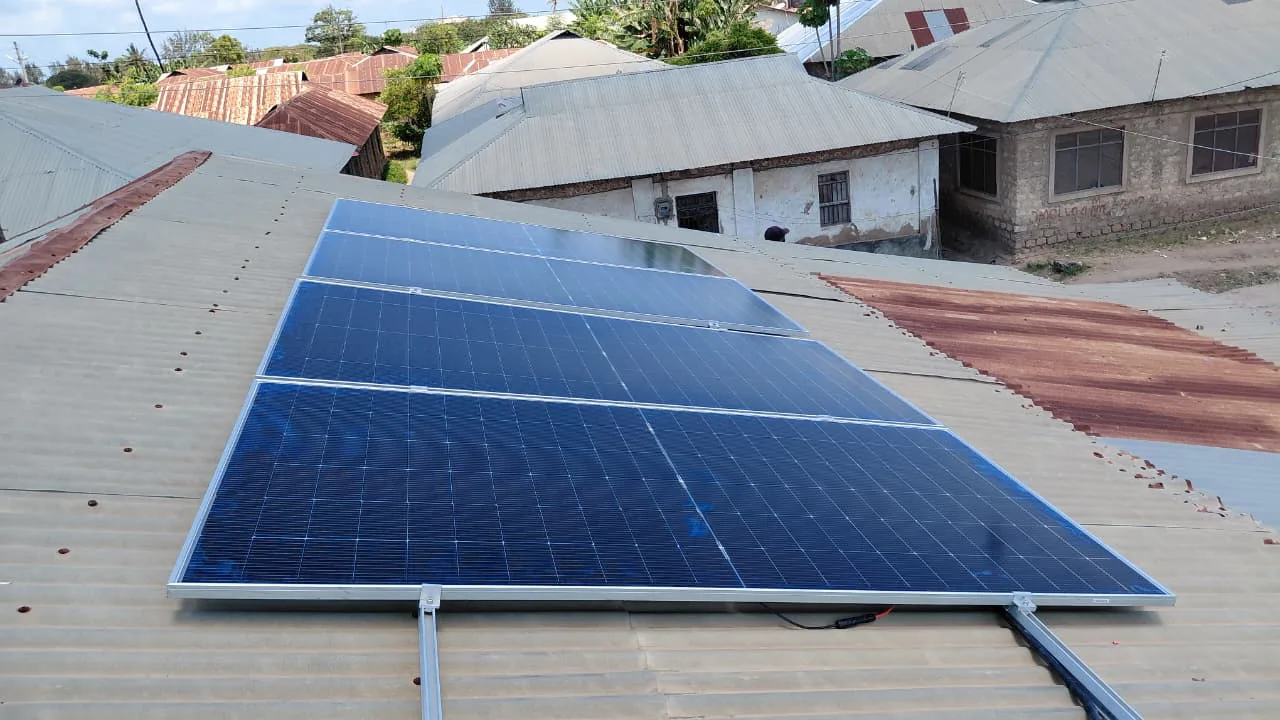
A panel's wattage only tells you its output in laboratory conditions. Two panels with the same wattage can perform very differently on your roof.
How it handles heat. Panels lose output as they get hotter. On a hot roof in Mombasa or Garissa, a panel that handles heat well produces noticeably more than one that doesn't.
How well it holds its output over time. All panels slowly lose output with age. Quality panels lose it more slowly, and their manufacturers guarantee how much output they'll keep after 25 years or more.
How it handles shade. A leaf, a branch or a dusty patch can shade part of a panel. A well-designed panel keeps the rest of it working, instead of letting one shaded corner drag down the whole panel. This also protects it from hot spots that shorten its life.
How it's built. Glass, frame, seals and junction box all decide how well a panel survives years of sun, rain and dust.
Genuine, not just branded
Counterfeit solar products are common in Kenya. A fake panel can carry a famous brand name and look identical to the real one. That's why we buy only directly from the manufacturer, or from authorised importers and main distributors in Kenya. You get a genuine product whose exact model, specifications and warranty can be traced.
No single spec makes a product "the best"
A battery or panel can only be judged as part of the system it's going into. The right battery for a home that runs on the sun is different from the right one for a clinic's backup.
You don't need to choose. That's our job. When we recommend a battery or panel, it's because we've considered it alongside the inverter, your roof, your climate and what you want solar to do.
Good products. Good design. Good installation. That's Solar Done Right.
Tell us what you want solar to do
We'll design the system around it — panels, batteries, inverter and all.
💬 WhatsApp Us →Frequently asked questions
How long do solar batteries last in Kenya?
It depends on the battery's cycle rating and how it's used. A quality lithium battery rated for 6,000 cycles or more can last over 16 years.
Are lithium batteries better than gel batteries?
Lithium batteries last many more cycles and let you use more of their stored energy. That's why every battery we install is lithium.
How can I tell if a solar panel is fake?
It's hard to tell by looking. The safest way is to buy through a company that sources from the manufacturer or an authorised distributor, and can show you the exact model and warranty.