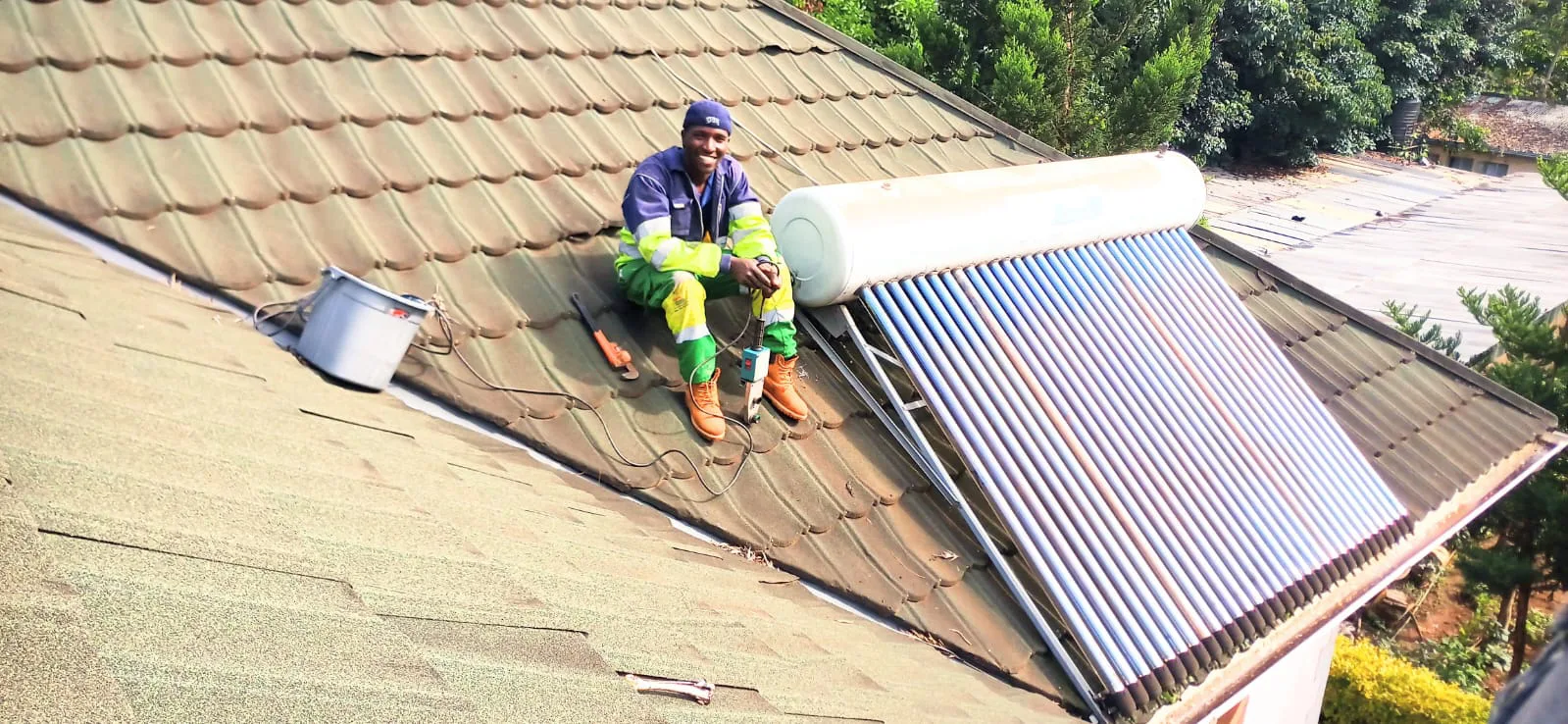
Heating water accounts for up to 40% of a typical Kenyan household's electricity bill. A well-chosen solar water heater eliminates most of that cost — but choosing the wrong system for Nairobi's climate means poor performance and a frustrated household.
Nairobi's Solar Resource: What You Need to Know
Nairobi sits close to the equator at 1,795 metres above sea level. This gives it strong solar radiation on clear days, but also means cloud cover during the long and short rainy seasons. A solar water heater for Nairobi must perform well in partly cloudy conditions, not just full sunshine.
Flat-Plate vs. Evacuated Tube Collectors
The two main collector technologies are flat-plate and evacuated tube (heat pipe).
Flat-plate collectors are simpler, more durable, and work well in sunny climates. They are slightly less efficient in cold or cloudy weather.
Evacuated tube collectors perform better in cooler or overcast conditions because each tube is individually insulated. For Nairobi's altitude and occasional cloud cover, evacuated tube systems generally outperform flat-plate during the rainy seasons.
Tank Size: How to Choose
A standard rule is 50 litres of tank capacity per person per day for comfortable hot water. Common sizes for Kenyan homes:
- 150L: 2–3 person household
- 200L: 3–4 person household
- 300L: 5–6 person household or guest house with a few rooms
- 500L+: Hostel, hotel, or commercial facility
Backup Element
All Claridge Solar water heaters include an electric backup element for cloudy days or periods of higher-than-usual hot water use. The backup only activates when the solar-heated water temperature falls below the set point — so your household never runs out of hot water, even during extended overcast periods.
Need help choosing the right size?
Tell us how many people are in your household and we'll recommend the right system.
Talk to Our Team →